Draft
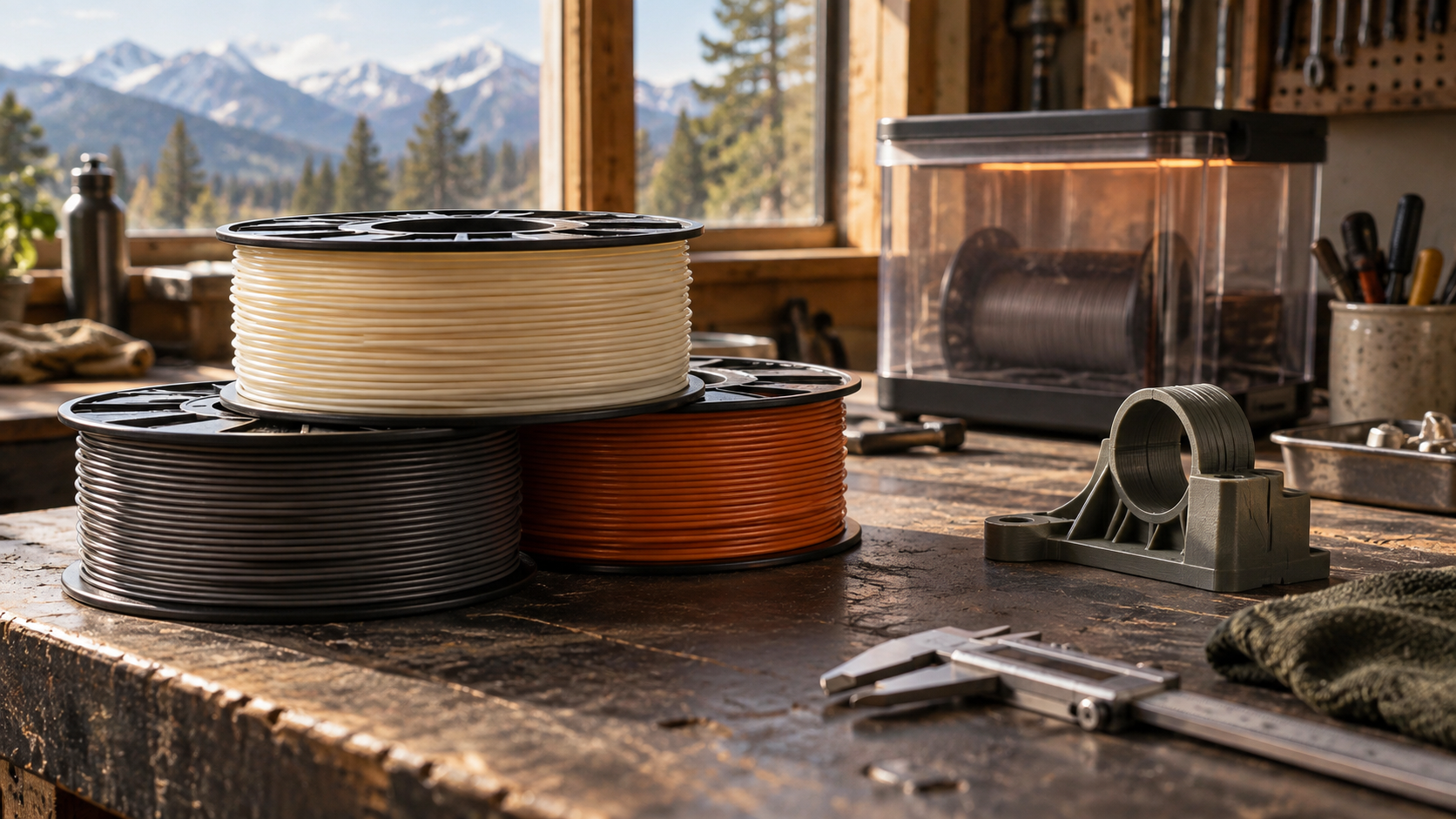
If you are new to 3D printing, filament names can make a simple choice sound more complicated than it is. For a lot of everyday FDM work, three materials will cover a large part of what you need to know: PLA, PETG, and ASA.
The simple version is:
- PLA is the easy general-purpose indoor choice.
- PETG is the tougher everyday functional choice.
- ASA is the better choice when a part needs better weather and heat resistance.
That is not every detail, but it is a useful place to start.
PLA: start here when the job is simple
PLA is popular because it is easy to print, widely available, usually inexpensive, and offered in a huge range of colors and finishes.
It is a good fit for many indoor products such as organizers, signs, display pieces, decorative items, prototypes, and light-duty household products.
Its biggest limitation is heat. If the finished part will spend time in a much warmer environment, PLA may not be the best choice.
For normal indoor use, though, beginners often make life harder than necessary by assuming they need something more exotic. If PLA does the job reliably, that can be the right business decision.
PETG: the practical workhorse
PETG sits in a useful middle ground. It is generally tougher than PLA and is often a good fit for products that will be handled frequently or used as functional parts.
That makes it useful for things such as shop organizers, brackets, holders, tool accessories, and other practical products.
The tradeoff is that PETG can be a little less forgiving cosmetically. It may string more and sometimes needs more tuning to get a very clean finish.
If the customer is buying the part because it needs to work rather than simply look nice on a shelf, PETG is often worth considering.
ASA: when the environment matters
ASA is worth looking at when the finished product needs better resistance to sunlight, weather, or higher temperatures.
That can make it useful for exterior products, vehicle accessories, outdoor mounts, and other parts that will not live in a climate-controlled room.
The tradeoff is that ASA is more demanding to print. It generally benefits from an enclosed printer and a more controlled setup.
That is why I would not tell a first-day beginner to start with ASA just because it sounds more capable. Use it when the product gives you a reason to use it.
Pick the material for the job
The most important lesson is that the more advanced material is not automatically the better material.
If a customer needs a simple indoor organizer, using a harder-to-print material may only increase cost and production trouble without improving the product in a meaningful way.
A good rule is to use the least complicated material that reliably does the job the customer expects.
A simple decision tree
Ask yourself:
Is this an ordinary indoor product? Start by considering PLA.
Is it a functional part that will see more handling or routine use? PETG may make more sense.
Does it need better weather, sunlight, or heat resistance? ASA may be the better fit.
Then ask whether the material prints reliably on your equipment and whether the extra cost or difficulty adds real value.
Printability is part of the cost
A material can be cheaper by the spool and still cost you more in production if it creates more failed jobs or requires more hands-on attention.
That is why a print ranch should care about repeatability, not just price per kilogram.
Failures cost material, machine time, electricity, and labor. Print Ranch Manager can include that failure burden when you calculate what a product really costs to make.
What about the other materials?
There are plenty of them, and many are useful. TPU is flexible. Nylon can be useful for demanding functional parts. Fiber-filled materials can change stiffness and other properties. ABS still has valid uses as well.
But you do not need to buy every material at once.
Learn one easy material first. Add the next one when the product creates a real need for it.
The short version
PLA: easy choice for many indoor and decorative products.
PETG: strong everyday choice for practical functional parts.
ASA: useful when weather, sunlight, or higher temperatures matter.
Do not choose filament because the name sounds impressive. Choose it because it makes the finished product more reliable, easier to produce, or both.